Quotes and first steps

Compare painting quotes and prepare your inquiry

Understand what is included, explain your priorities and make the next conversation more useful.

Try it in real life

Know what your painting quote includes.

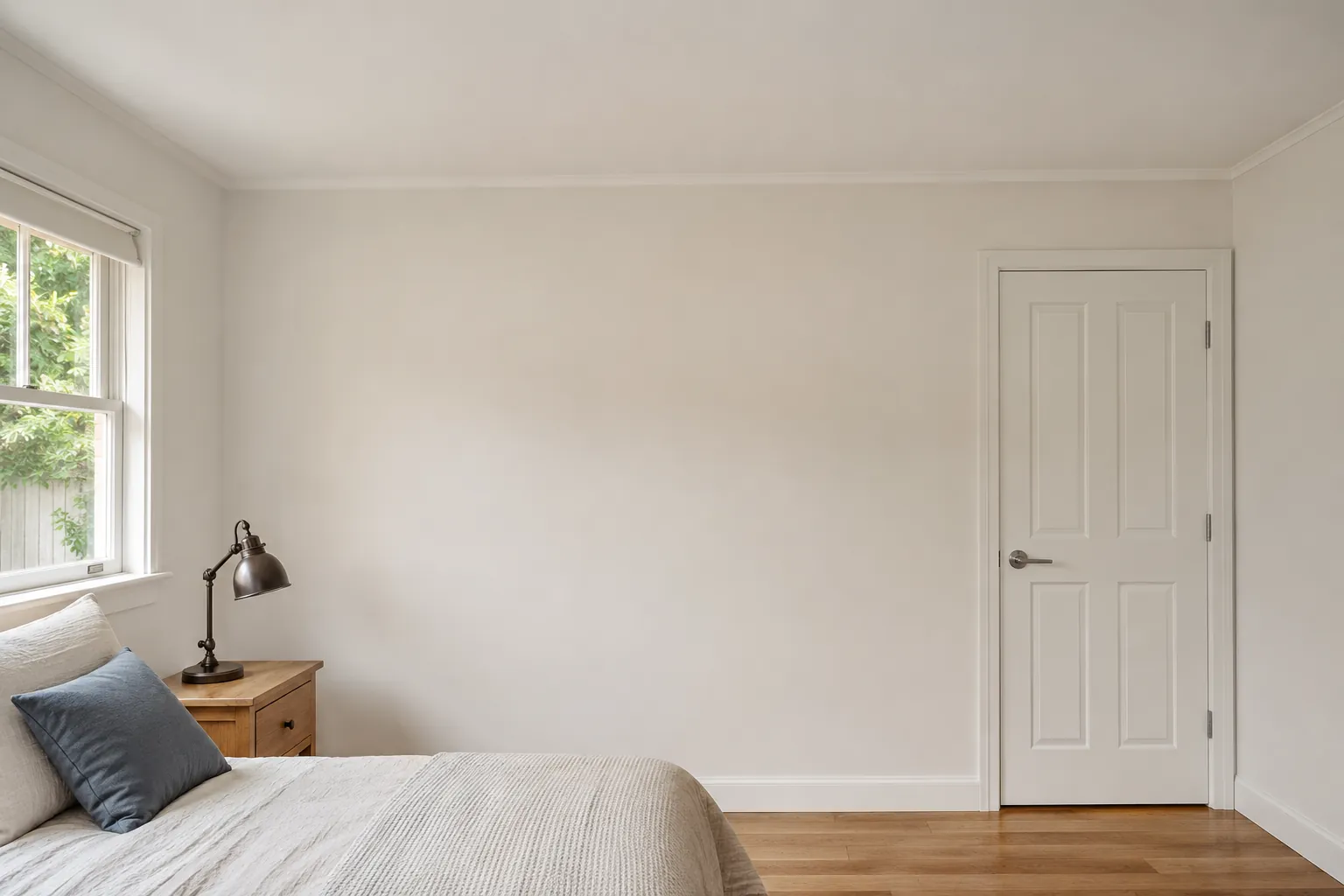
Use this bedroom to explain exactly what you want painted.

Example: walls included

Outlines mark example areas; they do not simulate a paint finish.

Step 1 of 3

A wall repaint is not the whole room.

In this example, walls are included; the ceiling, door and trim are excluded. LMJ suggests naming both included and excluded surfaces so the scope is clear.

Try this at home

Compare: which surfaces does each written quote actually include?

Illustrative scope options, not LMJ packages, prices or promises of included work. Your written quote determines the agreed work.

Why we recommend this
Industry reference

Painting Contractors Association · PCA P14 — Levels of Surface Preparation for Repainting and Maintenance Projects Receiving Architectural Coatings

What this explains: PCA P14 distinguishes four preparation levels and explains that existing surface condition and the selected preparation affect appearance, adhesion, durability and cost. Project specifications describing the type and extent of preparation take precedence.

Keep in mind: Applies to repainting/maintenance architectural coatings on previously finished surfaces. A written scope should identify the agreed preparation; citing P14 alone does not specify a level or promise restoration of every defect. No LMJ adoption or compliance is verified.

Read the original source ↗ (English · opens in a new tab)

Source content reviewed: November 7, 2026

Document and review details
Relevant section
P14 sections 1, 2.1–2.5, 5.2 and 5.4.
Applies to
U.S. architectural painting industry guidance; project agreement controls as applicable.. Repainting/maintenance preparation, rather than a universal new-construction specification.
Original document revision
Not stated in the reviewed document · Printed identifier: 20230918 in the official linked filename
Review method
Source content reviewed with assistance from Codex

Niveles de Preparación de Superficies para Proyectos de Repintado y Mantenimiento que Reciben Revestimientos Arquitectónicos ↗ (Spanish · opens in a new tab)

Official Spanish individual P14 linked from PCA Spanish page; scope and section 5.2 read. Layout and section organization differ; exact edition parity is not established.

Industry reference

Painting Contractors Association · PCA P3 — Impact of Paint Color

What this explains: PCA P3 says the number and location of paint colors and color ranges belong in bid and contract documents. It also calls for precise placement when different materials or sheens share a surface. These choices affect estimating and project cost.

Keep in mind: Industry guidance does not demonstrate LMJ membership, certification, adoption or compliance. It supports documenting the actual agreed scope, not promising that every estimate already follows PCA. It does not endorse an aesthetic palette.

Read the original source ↗ (English · opens in a new tab)

Source content reviewed: November 7, 2026

Document and review details
Relevant section
P3 sections 2.1–2.2, 5.1–5.2 and 5.6.2.
Applies to
U.S. architectural painting industry guidance; use as the identified voluntary standard in a project agreement as applicable.. Paint color count, range, placement and associated bid/contract scope.
Original document revision
Not stated in the reviewed document · Printed identifier: 20230918 in the official linked filename
Review method
Source content reviewed with assistance from Codex
PCA P3 — Designación del color de pintura ↗ (Spanish · opens in a new tab)

Official Spanish individual standard linked from the PCA Spanish page; sections 1, 2 and color-placement provisions read. Title, organization and wording differ from the English file, so do not claim exact edition parity.

How do I compare two quotes fairly?

LMJ planning suggestion

Compare the work before comparing the total. Check whether both quotes include the same rooms, walls, ceilings, trim and doors, then review preparation, products, colors and exclusions. Ask about any difference you cannot explain. Fewer surfaces or a different preparation plan can describe a different job. Keep the agreed scope in writing so you can see what each price actually includes.

Why we recommend this
Industry reference

Painting Contractors Association · PCA P14 — Levels of Surface Preparation for Repainting and Maintenance Projects Receiving Architectural Coatings

What this explains: PCA P14 distinguishes four preparation levels and explains that existing surface condition and the selected preparation affect appearance, adhesion, durability and cost. Project specifications describing the type and extent of preparation take precedence.

Keep in mind: Applies to repainting/maintenance architectural coatings on previously finished surfaces. A written scope should identify the agreed preparation; citing P14 alone does not specify a level or promise restoration of every defect. No LMJ adoption or compliance is verified.

Read the original source ↗ (English · opens in a new tab)

Source content reviewed: November 7, 2026

Document and review details
Relevant section
P14 sections 1, 2.1–2.5, 5.2 and 5.4.
Applies to
U.S. architectural painting industry guidance; project agreement controls as applicable.. Repainting/maintenance preparation, rather than a universal new-construction specification.
Original document revision
Not stated in the reviewed document · Printed identifier: 20230918 in the official linked filename
Review method
Source content reviewed with assistance from Codex

Niveles de Preparación de Superficies para Proyectos de Repintado y Mantenimiento que Reciben Revestimientos Arquitectónicos ↗ (Spanish · opens in a new tab)

Official Spanish individual P14 linked from PCA Spanish page; scope and section 5.2 read. Layout and section organization differ; exact edition parity is not established.

Industry reference

Painting Contractors Association · PCA P3 — Impact of Paint Color

What this explains: PCA P3 says the number and location of paint colors and color ranges belong in bid and contract documents. It also calls for precise placement when different materials or sheens share a surface. These choices affect estimating and project cost.

Keep in mind: Industry guidance does not demonstrate LMJ membership, certification, adoption or compliance. It supports documenting the actual agreed scope, not promising that every estimate already follows PCA. It does not endorse an aesthetic palette.

Read the original source ↗ (English · opens in a new tab)

Source content reviewed: November 7, 2026

Document and review details
Relevant section
P3 sections 2.1–2.2, 5.1–5.2 and 5.6.2.
Applies to
U.S. architectural painting industry guidance; use as the identified voluntary standard in a project agreement as applicable.. Paint color count, range, placement and associated bid/contract scope.
Original document revision
Not stated in the reviewed document · Printed identifier: 20230918 in the official linked filename
Review method
Source content reviewed with assistance from Codex

PCA P3 — Designación del color de pintura ↗ (Spanish · opens in a new tab)

Official Spanish individual standard linked from the PCA Spanish page; sections 1, 2 and color-placement provisions read. Title, organization and wording differ from the English file, so do not claim exact edition parity.

What can change the price?

LMJ planning suggestion

Preparation and color choices can change the work involved, so share the current condition and the changes you want. LMJ also reviews included surfaces, access, occupied areas and material responsibility before confirming a quote. Discuss these details during the walkthrough rather than relying on floor area alone. If the plan changes afterward, request an updated description and price before approving the added work.

Why we recommend this
Industry reference

Painting Contractors Association · PCA P14 — Levels of Surface Preparation for Repainting and Maintenance Projects Receiving Architectural Coatings

What this explains: PCA P14 distinguishes four preparation levels and explains that existing surface condition and the selected preparation affect appearance, adhesion, durability and cost. Project specifications describing the type and extent of preparation take precedence.

Keep in mind: Applies to repainting/maintenance architectural coatings on previously finished surfaces. A written scope should identify the agreed preparation; citing P14 alone does not specify a level or promise restoration of every defect. No LMJ adoption or compliance is verified.

Read the original source ↗ (English · opens in a new tab)

Source content reviewed: November 7, 2026

Document and review details
Relevant section
P14 sections 1, 2.1–2.5, 5.2 and 5.4.
Applies to
U.S. architectural painting industry guidance; project agreement controls as applicable.. Repainting/maintenance preparation, rather than a universal new-construction specification.
Original document revision
Not stated in the reviewed document · Printed identifier: 20230918 in the official linked filename
Review method
Source content reviewed with assistance from Codex

Niveles de Preparación de Superficies para Proyectos de Repintado y Mantenimiento que Reciben Revestimientos Arquitectónicos ↗ (Spanish · opens in a new tab)

Official Spanish individual P14 linked from PCA Spanish page; scope and section 5.2 read. Layout and section organization differ; exact edition parity is not established.

Industry reference

Painting Contractors Association · PCA P3 — Impact of Paint Color

What this explains: PCA P3 says the number and location of paint colors and color ranges belong in bid and contract documents. It also calls for precise placement when different materials or sheens share a surface. These choices affect estimating and project cost.

Keep in mind: Industry guidance does not demonstrate LMJ membership, certification, adoption or compliance. It supports documenting the actual agreed scope, not promising that every estimate already follows PCA. It does not endorse an aesthetic palette.

Read the original source ↗ (English · opens in a new tab)

Source content reviewed: November 7, 2026

Document and review details
Relevant section
P3 sections 2.1–2.2, 5.1–5.2 and 5.6.2.
Applies to
U.S. architectural painting industry guidance; use as the identified voluntary standard in a project agreement as applicable.. Paint color count, range, placement and associated bid/contract scope.
Original document revision
Not stated in the reviewed document · Printed identifier: 20230918 in the official linked filename
Review method
Source content reviewed with assistance from Codex

PCA P3 — Designación del color de pintura ↗ (Spanish · opens in a new tab)

Official Spanish individual standard linked from the PCA Spanish page; sections 1, 2 and color-placement provisions read. Title, organization and wording differ from the English file, so do not claim exact edition parity.

How do I separate essentials from optional work?

LMJ planning suggestion

Make two lists: work to include now and improvements to price separately. A ceiling, closet or accent color may be optional in your plan; preparation needed for the agreed surface should be discussed as part of that work. Keep unresolved moisture or repair issues separate from cosmetic choices. Ask for clear inclusions, exclusions and options so you can choose without losing sight of necessary preparation.

Why we recommend this
Industry reference

Painting Contractors Association · PCA P14 — Levels of Surface Preparation for Repainting and Maintenance Projects Receiving Architectural Coatings

What this explains: PCA P14 distinguishes four preparation levels and explains that existing surface condition and the selected preparation affect appearance, adhesion, durability and cost. Project specifications describing the type and extent of preparation take precedence.

Keep in mind: Applies to repainting/maintenance architectural coatings on previously finished surfaces. A written scope should identify the agreed preparation; citing P14 alone does not specify a level or promise restoration of every defect. No LMJ adoption or compliance is verified.

Read the original source ↗ (English · opens in a new tab)

Source content reviewed: November 7, 2026

Document and review details
Relevant section
P14 sections 1, 2.1–2.5, 5.2 and 5.4.
Applies to
U.S. architectural painting industry guidance; project agreement controls as applicable.. Repainting/maintenance preparation, rather than a universal new-construction specification.
Original document revision
Not stated in the reviewed document · Printed identifier: 20230918 in the official linked filename
Review method
Source content reviewed with assistance from Codex

Niveles de Preparación de Superficies para Proyectos de Repintado y Mantenimiento que Reciben Revestimientos Arquitectónicos ↗ (Spanish · opens in a new tab)

Official Spanish individual P14 linked from PCA Spanish page; scope and section 5.2 read. Layout and section organization differ; exact edition parity is not established.

Industry reference

Painting Contractors Association · PCA P3 — Impact of Paint Color

What this explains: PCA P3 says the number and location of paint colors and color ranges belong in bid and contract documents. It also calls for precise placement when different materials or sheens share a surface. These choices affect estimating and project cost.

Keep in mind: Industry guidance does not demonstrate LMJ membership, certification, adoption or compliance. It supports documenting the actual agreed scope, not promising that every estimate already follows PCA. It does not endorse an aesthetic palette.

Read the original source ↗ (English · opens in a new tab)

Source content reviewed: November 7, 2026

Document and review details
Relevant section
P3 sections 2.1–2.2, 5.1–5.2 and 5.6.2.
Applies to
U.S. architectural painting industry guidance; use as the identified voluntary standard in a project agreement as applicable.. Paint color count, range, placement and associated bid/contract scope.
Original document revision
Not stated in the reviewed document · Printed identifier: 20230918 in the official linked filename
Review method
Source content reviewed with assistance from Codex

PCA P3 — Designación del color de pintura ↗ (Spanish · opens in a new tab)

Official Spanish individual standard linked from the PCA Spanish page; sections 1, 2 and color-placement provisions read. Title, organization and wording differ from the English file, so do not claim exact edition parity.

Government guidance

U.S. Environmental Protection Agency · A Brief Guide to Mold, Moisture and Your Home

What this explains: Fix the water problem and address mold before painting. EPA recommends indoor relative humidity below 60%, ideally 30–50%, where possible, to help control mold.

Keep in mind: These are indoor mold-control targets, not coating application limits. Remediation needs assessment; paint does not repair a leak. This does not establish an LMJ remediation qualification.

Read the original source ↗ (English · opens in a new tab)

Source content reviewed: November 7, 2026

Document and review details
Relevant section
Mold Cleanup Guidelines; Moisture and Mold Prevention and Control Tips.
Applies to
Residential mold-prevention guidance in the United States.
Original document revision
February 18, 2026
Review method
Source content reviewed with assistance from Codex

What do I need for my first inquiry?

LMJ planning suggestion

You do not need measurements or an account to contact LMJ. Share your city, property type, rooms or surfaces to paint and preferred timing. Mention whether the space is occupied, visible damage and any colors or paint you have in mind. Photos are helpful if you choose to provide them. It is fine to leave decisions open; LMJ can discuss the project and arrange the next step before confirming the written scope and price.

Why we recommend this
Industry reference

Painting Contractors Association · PCA P14 — Levels of Surface Preparation for Repainting and Maintenance Projects Receiving Architectural Coatings

What this explains: PCA P14 distinguishes four preparation levels and explains that existing surface condition and the selected preparation affect appearance, adhesion, durability and cost. Project specifications describing the type and extent of preparation take precedence.

Keep in mind: Applies to repainting/maintenance architectural coatings on previously finished surfaces. A written scope should identify the agreed preparation; citing P14 alone does not specify a level or promise restoration of every defect. No LMJ adoption or compliance is verified.

Read the original source ↗ (English · opens in a new tab)

Source content reviewed: November 7, 2026

Document and review details
Relevant section
P14 sections 1, 2.1–2.5, 5.2 and 5.4.
Applies to
U.S. architectural painting industry guidance; project agreement controls as applicable.. Repainting/maintenance preparation, rather than a universal new-construction specification.
Original document revision
Not stated in the reviewed document · Printed identifier: 20230918 in the official linked filename
Review method
Source content reviewed with assistance from Codex

Niveles de Preparación de Superficies para Proyectos de Repintado y Mantenimiento que Reciben Revestimientos Arquitectónicos ↗ (Spanish · opens in a new tab)

Official Spanish individual P14 linked from PCA Spanish page; scope and section 5.2 read. Layout and section organization differ; exact edition parity is not established.

Industry reference

Painting Contractors Association · PCA P3 — Impact of Paint Color

What this explains: PCA P3 says the number and location of paint colors and color ranges belong in bid and contract documents. It also calls for precise placement when different materials or sheens share a surface. These choices affect estimating and project cost.

Keep in mind: Industry guidance does not demonstrate LMJ membership, certification, adoption or compliance. It supports documenting the actual agreed scope, not promising that every estimate already follows PCA. It does not endorse an aesthetic palette.

Read the original source ↗ (English · opens in a new tab)

Source content reviewed: November 7, 2026

Document and review details
Relevant section
P3 sections 2.1–2.2, 5.1–5.2 and 5.6.2.
Applies to
U.S. architectural painting industry guidance; use as the identified voluntary standard in a project agreement as applicable.. Paint color count, range, placement and associated bid/contract scope.
Original document revision
Not stated in the reviewed document · Printed identifier: 20230918 in the official linked filename
Review method
Source content reviewed with assistance from Codex

PCA P3 — Designación del color de pintura ↗ (Spanish · opens in a new tab)

Official Spanish individual standard linked from the PCA Spanish page; sections 1, 2 and color-placement provisions read. Title, organization and wording differ from the English file, so do not claim exact edition parity.

Sources and review informationSee the references and when they were reviewed.

LMJ explains this information using the sources linked below. Product instructions and site conditions determine the appropriate approach. Referencing an organization does not imply its endorsement of LMJ.

Design and planning ideas are LMJ suggestions. These sources explain the technical guidance; they do not document LMJ projects or certifications.

Painting Contractors Association · PCA P14 — Levels of Surface Preparation for Repainting and Maintenance Projects Receiving Architectural Coatings
Industry reference

Painting Contractors Association · PCA P14 — Levels of Surface Preparation for Repainting and Maintenance Projects Receiving Architectural Coatings

What this explains: PCA P14 distinguishes four preparation levels and explains that existing surface condition and the selected preparation affect appearance, adhesion, durability and cost. Project specifications describing the type and extent of preparation take precedence.

Keep in mind: Applies to repainting/maintenance architectural coatings on previously finished surfaces. A written scope should identify the agreed preparation; citing P14 alone does not specify a level or promise restoration of every defect. No LMJ adoption or compliance is verified.

Read the original source ↗ (English · opens in a new tab)

Source content reviewed: November 7, 2026

Document and review details
Relevant section
P14 sections 1, 2.1–2.5, 5.2 and 5.4.
Applies to
U.S. architectural painting industry guidance; project agreement controls as applicable.. Repainting/maintenance preparation, rather than a universal new-construction specification.
Original document revision
Not stated in the reviewed document · Printed identifier: 20230918 in the official linked filename
Review method
Source content reviewed with assistance from Codex

Niveles de Preparación de Superficies para Proyectos de Repintado y Mantenimiento que Reciben Revestimientos Arquitectónicos ↗ (Spanish · opens in a new tab)

Official Spanish individual P14 linked from PCA Spanish page; scope and section 5.2 read. Layout and section organization differ; exact edition parity is not established.

Painting Contractors Association · PCA P3 — Impact of Paint Color
Industry reference

Painting Contractors Association · PCA P3 — Impact of Paint Color

What this explains: PCA P3 says the number and location of paint colors and color ranges belong in bid and contract documents. It also calls for precise placement when different materials or sheens share a surface. These choices affect estimating and project cost.

Keep in mind: Industry guidance does not demonstrate LMJ membership, certification, adoption or compliance. It supports documenting the actual agreed scope, not promising that every estimate already follows PCA. It does not endorse an aesthetic palette.

Read the original source ↗ (English · opens in a new tab)

Source content reviewed: November 7, 2026

Document and review details
Relevant section
P3 sections 2.1–2.2, 5.1–5.2 and 5.6.2.
Applies to
U.S. architectural painting industry guidance; use as the identified voluntary standard in a project agreement as applicable.. Paint color count, range, placement and associated bid/contract scope.
Original document revision
Not stated in the reviewed document · Printed identifier: 20230918 in the official linked filename
Review method
Source content reviewed with assistance from Codex

PCA P3 — Designación del color de pintura ↗ (Spanish · opens in a new tab)

Official Spanish individual standard linked from the PCA Spanish page; sections 1, 2 and color-placement provisions read. Title, organization and wording differ from the English file, so do not claim exact edition parity.

U.S. Environmental Protection Agency · A Brief Guide to Mold, Moisture and Your Home
Government guidance

U.S. Environmental Protection Agency · A Brief Guide to Mold, Moisture and Your Home

What this explains: Fix the water problem and address mold before painting. EPA recommends indoor relative humidity below 60%, ideally 30–50%, where possible, to help control mold.

Keep in mind: These are indoor mold-control targets, not coating application limits. Remediation needs assessment; paint does not repair a leak. This does not establish an LMJ remediation qualification.

Read the original source ↗ (English · opens in a new tab)

Source content reviewed: November 7, 2026

Document and review details
Relevant section
Mold Cleanup Guidelines; Moisture and Mold Prevention and Control Tips.
Applies to
Residential mold-prevention guidance in the United States.
Original document revision
February 18, 2026
Review method
Source content reviewed with assistance from Codex
Dates record a content review, not just a working link. An internal record retains the reviewer or review tool, conditions and follow-up items.

Bring your questions to LMJ.

Your property may need a different approach. Tell us your city, the surfaces you want painted and what you would like help deciding.

Request a quote